
Best ADU Builders in San Diego

snap-adu-logo-color

Menu

Understanding California ADU Rules

California ADU Regulations 2026: Laws, Rules & Requirements for Homeowners

California ADU regulations have significantly expanded what homeowners can build on their properties. These statewide ADU laws apply across all cities and counties, providing a baseline for what’s allowed. While each city may adopt its own guidelines, they cannot be more restrictive than California ADU law. In fact, some cities offer more flexible policies to encourage ADU development.

Understanding both state law and local rules is key to determining what you can build. For example, ADU size limits in California can vary based on local zoning, but state law guarantees certain minimums.

At SnapADU, we’ve built 100+ ADUs and keep a close eye on how state law translates into local practice. We’re committed to helping homeowners make informed decisions based on our real-world experience… not just repeating headlines. That’s why we’ve summarized what you need to know about California ADU law and how it applies to your project, as well as a regulation guide for each city in San Diego County.

This guide will break down the most important aspects of California’s ADU regulations, highlight what’s new for 2026, and explain how these rules apply alongside your local city or county requirements.

Quick Summary: What Are California ADU Regulations in 2026?

  • Apply statewide to all cities and counties
  • Single family: add at least one ADU, one conversion ADU, and one JADU, plus an 800 SF detached ADU
  • Multifamily: add as many as the number of existing units, up to eight detached ADUs
  • Local rules cannot be more restrictive than state ADU laws – HCD enforces this requirement as needed
  • Regulations have been updated most recently in 2023, 2024, 2025, and 2026 to remove barriers and streamline approvals
  • Full text: California Government Code CHAPTER 13. Accessory Dwelling Units (§§ 66310–66342)

When Do California’s ADU Laws Apply?

California’s ADU laws are outlined in CHAPTER 13. Accessory Dwelling Units (§§ 66310–66342) and establish the baseline rules that all cities and counties must follow.

These laws apply statewide, meaning that local jurisdictions cannot override them with more restrictive policies. In fact, if there’s ever a conflict between local zoning and California ADU regulations, the state law takes precedence. We’re regularly advocating for homeowners when a local jurisdiction attempts to apply a more stringent interpretation than is legally allowed.

Bottom line: if you’re being told “you can’t do that,” it’s worth checking whether state ADU law actually says you can.

So whether you’re in San Diego, San Francisco, or anywhere in between, the state’s ADU regulations guarantee certain rights, including reduced setbacks, exemption from minimum lot sizes, and streamlined permitting.

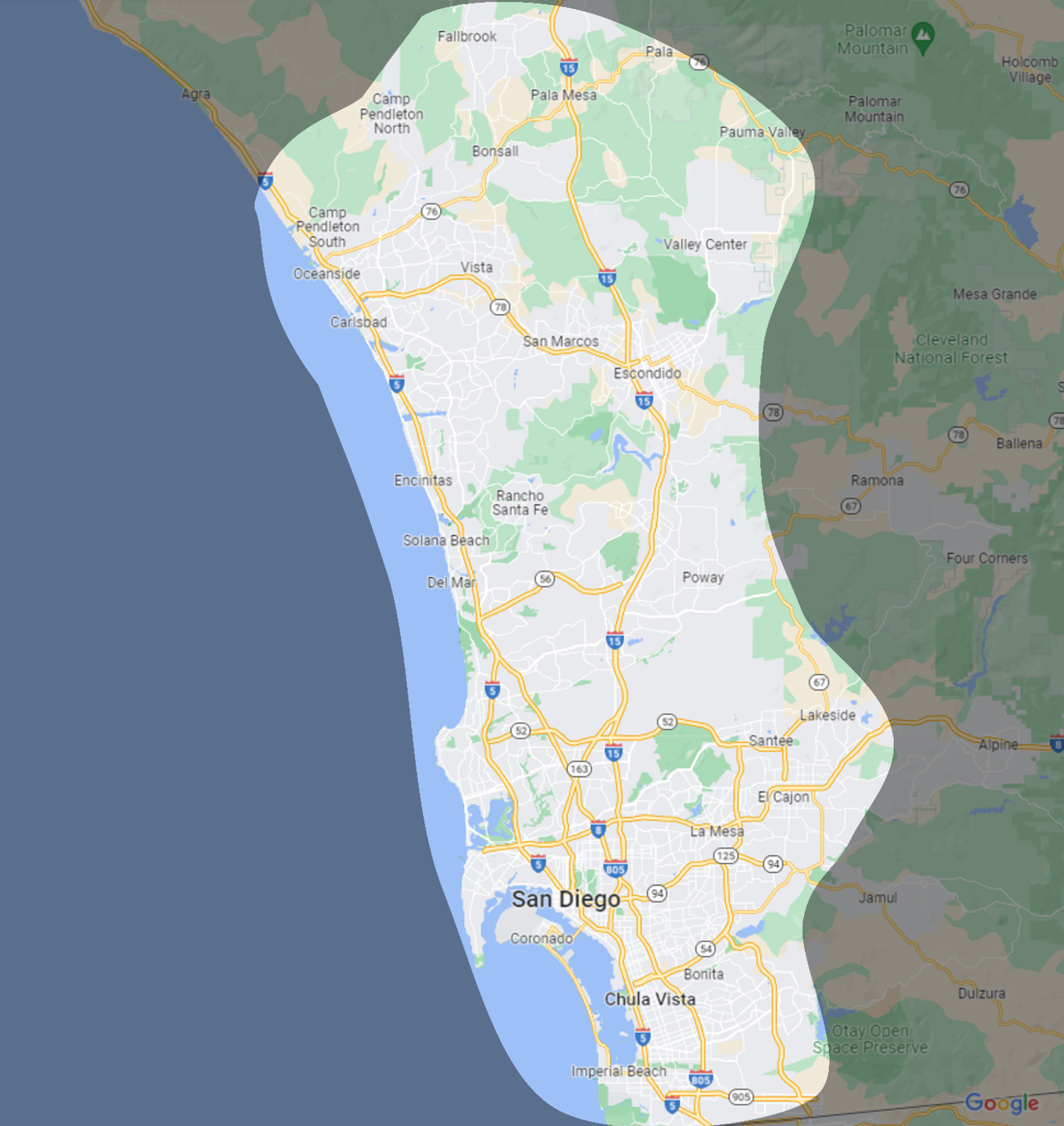
While California sets baseline rules, each city in San Diego County has its own regulations as well. Some cities offer even more lenient policies to encourage ADU development beyond what the state requires. Use the dropdown to explore your city’s specific ADU regulations and understand how they align with state requirements.


Overview of California ADU Laws & Regulations (2026)

Below is SnapADU’s analysis of the key elements of California ADU regulations that will impact your ADU build. Note that your local jurisdiction’s laws are what you must comply with, but State law overrides any local requirements that are more stringent than this baseline.

Number of ADUs Allowed per California State Law

How many ADUs can I build on my single-family property?

You may add one new construction detached or attached ADU per local rules, one single-family converted ADU, and one junior ADU aka JADU (a conversion of existing space up to 500 sf)… and also one 800 square foot detached ADU.

Yes, that’s four ADUs, and this is a new development as of 2026. Read more about how many ADUs are allowed on single family properties in California.

How many ADUs can I build on my multi-family property?

Multifamily property owners are permitted to build as many ADUs as there are existing units, with a maximum of eight detached ADUs.

Additionally, non‐livable space within existing multi‐family structures may be converted into an ADU. Examples of areas that can be converted include storage rooms and garage spaces. The maximum number of ADU allowed in a multi‐family structure is equal to 25% of the number of existing multi‐family units in the structure. Fractional units are rounded down. A minimum of one conversion ADU is allowed.

Read more about how many ADUs you can build on multifamily properties.

ADU Size & Building Constraints per California State Law

What size detached ADU can I build?

Cities must allow at least a maximum of 850 square feet for a studio or one bedroom ADU or 1,000 square feet for an ADU with more than one bedroom.

California mandates cities to allow ADUs up to 800 square feet exempt from lot coverage requirements (Meaning you can build an ADU of this size even if you’re maxed out on lot coverages). This is referred to as a state exempt ADU.

Can I build a 2-story ADU?

California establishes a base height limitation of 16 feet for detached ADUs, which only allows for a single story. However, the maximum height limitation on a detached ADU increases to 18 feet if the ADU is “either within a half-mile walking distance of a major transit stop or a high-quality transit corridor” and provides for an additional two feet for roof pitch to align with the roof pitch of the primary dwelling unit. 18 feet allows for two stories, though the stories will be tight.

Additionally, the height limit Increases the height to 18 feet for a detached ADU that is on a lot with an existing or proposed multifamily, multistory dwelling

For attached ADUs, the maximum height limitation that may be imposed by a local agency on an attached ADU to 25 feet, or the existing primary dwelling height limit if lower than 25 feet. California does not require a local agency to allow an ADU to exceed two stories.

How big can an attached ADU be?

For both detached and attached ADUs, cities must allow at least a maximum of 850 sqft for a studio or one bedroom ADU or 1,000 sqft for an ADU with more than one bedroom.

The total floor area of an attached accessory dwelling unit shall not exceed 50 percent of the existing primary dwelling. Note that some municipalities like San Diego have waived this requirement.

What are the requirements of the exterior of the ADU?

For a state exempt ADU (ADUs under 800 square feet), cities are not allowed to impose any objective development standards. However, the state allows a city to apply objective development and design standards such as landscape and architectural review for non statewide exemption ADUs.

HOAs may impose some limited objective standards on an ADU or JADU, such as requiring specific materials, architectural styles, or other design and aesthetic restrictions within reason.

Setbacks per California State ADU Law

What is the setback requirement for an ADU?

ADUs must have 4′ minimum setbacks from rear and side yard property lines, with front yard setback per zoning standards. An ADU taking advantage of the four-foot setback provision shall not be allowed to exceed a height of 16 feet, or 18 feet if the ADU is “either within a half-mile walking distance of a major transit stop or a high-quality transit corridor”. An attached or detached ADU exceeding the height limitation must comply with the setbacks of the zoning district in which it is located.

Note that California state ADU law allow for at least an 800 square feet ADU, regardless of front setbacks and FAR. This means you could build an ADU encroaching in the front setback if there is no alternative location for the ADU.


What is the minimum distance the ADU must be from existing structures?

Building separation setback requirements are dependent on the city. In most cases they are 6′ or 10′, but there are some cities that do not have any specified requirement.

ADU Parking per California State Law

What is the parking requirement for an ADU?

A parking space is not required for an ADU in any of the following instances:

  • Within a one-half mile walking distance from public transit, which includes bus stops.
  • Within an established historic district.
  • Converted from the existing space of a primary residence or accessory structure, or are attached to an existing or proposed primary residence.

Effective Jan 2025 (SB1211): When a garage, carport, covered parking structure, or uncovered parking space is demolished or converted for construction of an ADU, replacement parking will not be required.

Where can a parking space be located?

If a parking space is required, it may be located within the setbacks and in an existing driveway as tandem parking. Parking spaces don’t need to be replaced when a garage, carport, or covered parking structure is demolished in conjunction with the construction of an ADU or converted to an ADU.

Resources for Understanding California ADU Laws and Code Requirements

California ADU Code: CHAPTER 13 Accessory Dwelling Units (§ 66310-66342)

2025 HCD ADU Handbook

Key Changes to California ADU Rules


New ADU Laws California 2026 (Updates Effective January 1, 2026)

California continues to refine state ADU law to remove friction, prevent local obstruction, and standardize how cities process ADU and JADU applications. In late 2025, the State passed several bills that take effect January 1, 2026, and HCD issued an official addendum to the ADU Handbook to clarify how these changes must be applied statewide. Here are the most important updates homeowners should know about.

Junior ADUs (JADUs) (AB 1154, SB 543)

AB 1154 and SB 543 tighten and clarify how JADUs work:

  • JADUs are now explicitly limited to 500 square feet of interior livable space.

  • If a JADU shares sanitation facilities with the main house, then owner occupancy is required.

  • If a JADU has its own bathroom, then owner occupancy is NOT required.

  • JADUs can no longer be used as short-term rentals.

  • A JADU cannot trigger a sprinkler requirement if the main home does not already have sprinklers

Impact Fees (SB 543)

SB 543 further limits when impact fees can be charged:

  • No impact fees can be charged on ADUs 750 sq ft or smaller and no impact or schools fees can be charged for JADUs.

  • For ADUs over 750 sq ft, fees must be charged proportionally based on the size of the ADU compared to the main house. Cities can no longer use arbitrary or flat fee schedules.

  • Any ADU or JADU under 500 sq ft does not increase assessable space, which matters for property tax and school fee calculations.

Permit Processing (SB 543)

SB 543 also tightens the rules around application completeness and agency delays:

  • Within 15 business days, the city must decide if your application is complete and provide written notice.

  • If incomplete, the city must list exactly what is missing and explain exactly how to fix it.

  • Once you resubmit, the city cannot introduce new requirements.

  • If you dispute a completeness determination or denial, the city must issue a final written decision within 60 business days.

This builds on California’s existing 60-day ADU approval requirement and is designed to stop cities from slow-walking projects through endless “incompleteness” cycles.

Size Limits (SB 543)

SB 543 additionally clarifies that ADU size limits are measured by interior livable space, not exterior walls, garages, or structural thickness. This prevents cities from playing games with how square footage is calculated.

Coastal Zone & Disaster Rebuild Protections (AB 462)

AB 462 says that cities or the Coastal Commission must now approve or deny ADU coastal permits within 60 days of a complete application. If a primary home was destroyed in a declared disaster area, the city must issue a certificate of occupancy for the ADU even if the main home is not yet complete, as long as statutory conditions are met.

Stronger State Enforcement (SB 9, SB 543)

SB 9 and SB 543 now make it crystal clear that if a city or county fails to submit its ADU or JADU ordinance to HCD on time, or fails to fix violations after HCD review, their local ordinance becomes null and void and only state law applies. This gives HCD significantly more teeth and protects homeowners from illegal local rules.

HOA & CC&R Rules (AB 130)

AB 130 states that HOAs and CC&Rs still may impose reasonable restrictions, but those restrictions cannot include fees or financial requirements related to ADU.

Permit Timeline Protection (AB 253)

AB 253 says that if your jurisdiction takes more than 30 business days to review a complete ADU building permit, you may be allowed to hire a certified private plan checker and force a decision within 10 business days. This prevents ADU projects from getting stuck in permit limbo due to city backlogs.

Online Permit Portals (AB 920)

AB 920 requires large jurisdictions (population 150,000+) to create a centralized online permit application portal for housing projects, including ADUs. These portals must allow homeowners to submit applications and track their status online. Most jurisdictions must launch these systems by January 1, 2028, with a possible extension to January 1, 2030 if the city or county formally documents cost concerns and begins procurement.

Historic District Rule (AB 1061)

AB 1061 limits when historic designations can stop ministerial ADU and housing approvals. Cities can only deny ministerial processing if the actual property is individually listed as a historic resource or landmark. Being inside a historic district alone is no longer enough. Local agencies may still enforce objective design standards, but they cannot use broad historic overlays to force discretionary review in most cases.

Other bills that are being discussed and may be going into effect sometime in 2026 include AB 1208, AB 1294, and SB 315.

What This Means in Practice

Taken together, the 2026 updates continue California’s clear direction:

  • Faster approvals

  • Fewer local loopholes

  • Tighter timelines

  • More protection from arbitrary fees

  • Less room for cities to block or delay compliant ADU projects

At SnapADU, we actively track how these laws are actually being applied by local jurisdictions, and we regularly step in when cities attempt to enforce rules that no longer comply with state law.

New ADU Laws California 2025 (Updates Effective January 1, 2025)

SB 477, AB 2533, SB 1211, and AB 1332 were enacted to make changes to the California State ADU law.

Parking

  • If uncovered off-street parking is removed to build an ADU, replacement is not required.

Multifamily Detached ADUs

  • Allows up to 8 detached ADUs on multifamily lots, provided the number doesn’t exceed the existing number of dwelling units on the property.

Pre-Approved ADU Plans

  • Local agencies must accept pre-approved ADU plans from any source, without restricting who may submit them.
  • Cities must accept any plans permitted in that jurisdiction during the current code cycle as pre-approved, provided the applicant gains permission from the designer.
  • All pre-approved plans must be made publicly available on the city’s website.
  • Agencies may accept ADU plans that have been developed and approved by other localities within the state.
  • Applications for ADU permits using pre-approved plans must be approved or denied within 30 days.

Unpermitted ADUs

  • Local agencies cannot deny permits for unpermitted ADUs built before January 1, 2020, unless safety is at risk.
  • Agencies must publish checklists and guidance on how owners can bring ADUs into compliance

Objective Standards

  • Agencies cannot apply development standards to certain ADUs unless specifically authorized by state law.
  • Prevents cities from layering in non-statutory rules under the guise of “objective” criteria. This prevents arbitrary design review or subjective interpretation of ADU applications.

Livable Space Definition

  • “Livable space” now defined clearly for purposes of internal conversion and multifamily ADU allowance rules.

Government Code Renumbering

  • All ADU/JADU laws were moved from §65852 to §66310-§66342 for clarity and legal consistency.


SB543 ADU Permit Timelines “Shot Clock” Update (Effective October 2025)

California law requires ADU permits to be reviewed ministerially, which means no public hearing or discretionary review. Under SB543, cities and counties must now follow stricter timelines to keep ADU approvals moving:

  • Within 15 business days of receiving an ADU application, the city must determine if it’s complete and issue written notice to the applicant.

  • If items are missing, the city must list exactly what’s incomplete and explain how to correct it.

  • Once the applicant resubmits, the city cannot add new requirements beyond the listed items.

  • If the city fails to respond within the required timeframe, the application is deemed complete by default.

This law reinforces California’s commitment to faster, more predictable ADU permitting. When paired with the existing 60-day review “shot clock”, SB 543 ensures agencies can’t stall projects with open-ended completeness reviews.

New ADU Laws 2023 (Updates Effective January 1, 2023)

Below are key components of law that went into effect in 2023 that still govern ADU development today.

Owner Occupancy

  • No more sunset: State law now permanently prohibits owner-occupancy requirements for ADUs.
  • Homeowners do not have to live in the main home or ADU.

Setbacks and Zoning

  • Cities must allow at least an 800 sqft ADU with 4′ side & rear setbacks, even if it doesn’t meet other lot coverage, FAR, or front setbacks. This means you may build an ADU encroaching on the front setback if there is nowhere else to build.

ADU Height Limits

  • Detached ADUs on lots with single or multifamily units must be allowed up to 16 feet in height.
  • Detached ADUs within half a mile of major transit stops or high-quality transit corridors can be 18 feet tall. An additional 2 feet can be added if the ADU’s roof pitch matches the primary dwelling.
  • Detached ADUs on lots with multifamily, multi-story dwellings can be 18 feet tall.
  • Attached ADUs can be up to 25 feet tall or the height limitation of the primary dwelling, whichever is lower.

HCD Enforcement Authority

  • Gives California Department of Housing and Community Development (HCD) the right to step in if cities fail to comply with ADU laws, including enforcement of pre-approved plan programs, lot splits, and more.

Watch our ADU 101 Webinar

Thinking about building an ADU and want to learn more about the whole process? We’d love to help make sure you know exactly how it all works in our on-demand webinar led by SnapADU co-founder, Whitney Hill. Learn the top insights from an experienced ADU contractor in San Diego.

Check Out Additional Guides to ADU Rules in California

Understanding ADU Construction in California

Curious about what it actually takes to build an ADU? We walk through the overall process, who’s involved, and what to expect during construction in California.

Snap ADU Rippey El Cajon Construction Progress Framing Corner 2BR 2BA
ADU Costs Graphic Phone with Cost Data in front of ADU Construction Site

How Much Does an ADU Cost in California?

From construction to permit fees, here’s what to expect when budgeting for your California ADU project.

California Pre-Approved ADU Plans

Many cities now offer pre-approved ADU plans that can save time and money, especially under California’s 2025 mandate. Learn what qualifies and when you can use them.

pre approved ADU image
modular prefab adu abodu villa crest studio shed samara comparison blog

Prefab ADUs in California

Thinking about a prefab ADU? Modular and manufactured builds can offer faster timelines, but they still need to meet California ADU regulations, local permitting requirements, and site access constraints. Learn the pros, cons, and how prefab compares to traditional construction.

Selling ADUs as Condominiums in California (AB 1033)

AB 1033 allows local jurisdictions to permit the separate sale of an ADU and the primary home as individual condominiums. Cities must opt in to allow ADU sales within their local regulations. Learn how condo conversion of ADUs works, what’s required to qualify, and which cities (like San Diego) are beginning to allow it.

240104 Pham View 1
Snap ADU San Diego Law Modern 2 Story Aerial Pacific Beach Private Entrance Fence

Building ADUs on Multifamily Properties in California

California ADU law allows two detached ADUs on multifamily lots, or up to eight so long as the ADUs do not exceed the number of existing units on the property. Interior conversions in existing spaces are also allowed. Read more about multifamily ADU rules.

What About SB9 and Duplexes?

Some homeowners confuse SB9 with ADU rules. SB9 allows urban lot splits and two units per lot. Learn how ADUs and SB9 interact, and compare which is better for your property.

Snap ADU San Diego Law Modern 2 Story Aerial Overhead Between Buildings
Snap ADU San Diego Valle Del Sur 2 Story Black Farmhouse Front Door Concrete Wall Setbacks.

Setback Requirements Explained

The state mandates just 4-foot side and rear setbacks for detached ADUs under 800 sqft. But what about front setbacks, sloped lots, and building separation? Get the full story on ADU setbacks.

Fire Zones & Fire Access

Being in a fire hazard severity zone or lacking fire access can impact your ADU. Here’s what you need to know about fire regulations and ADUs.

Snap ADU Fire Chapstick Branded Forest California
Carlsbad Solar Panels SD County Solar

Are Solar Panels Required on ADUs?

Often, but not always. Detached ADUs over 800 sqft generally require solar under Title 24. Learn more about solar requirements and exemptions for ADUs in California

Can I Build a Two-Story ADU in California?

Yes. State law doesn’t prohibit it, and many cities allow up to 25 to 30 feet in height. Here’s what to know about two-story ADUs in California, including a breakdown of San Diego cities and what is allowed in each.

Snap ADU Contemporary Two Story 1200 Sqft Gray Siding Metal Roof With Porch