

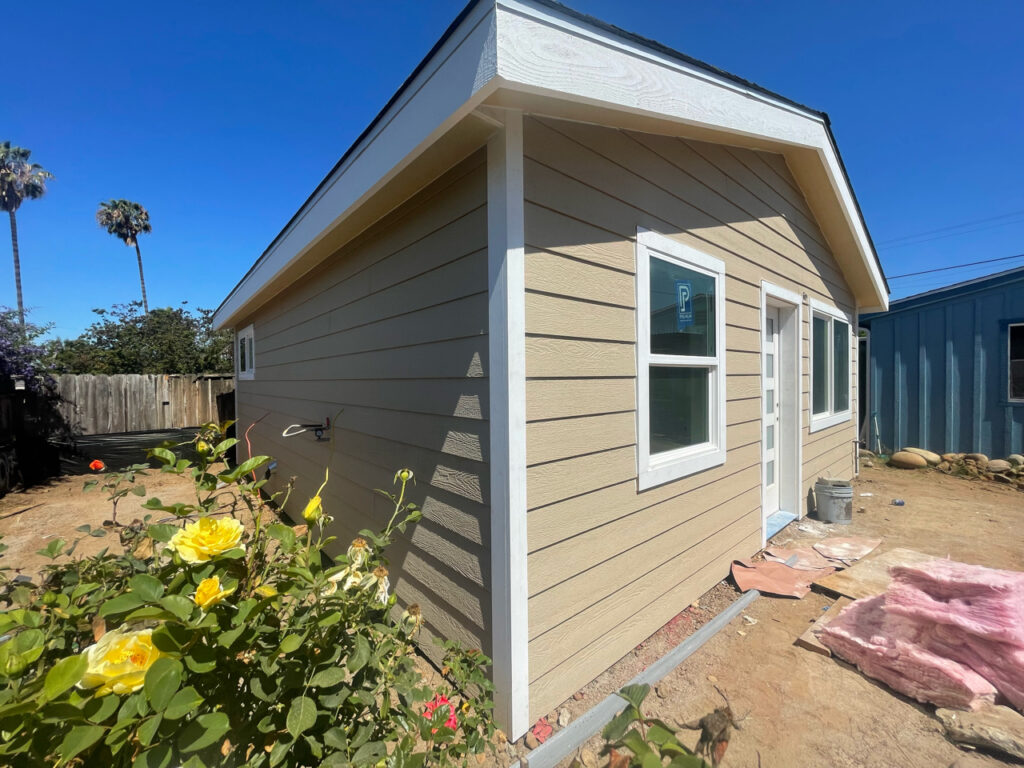
If you have followed local legislation in recent years, you have seen numerous examples of how California is moving to be more of an ADU-friendly state. Things like fee waivers, owner occupancy requirements, and even a recent bonus program all serve to entice homeowners to build more of these accessory dwelling units on their property. However, there are limited resources available describing the experience for homeowners after the ADU is built and a family member is living in it. So, how do you know what to expect once your dwelling is ready for move in? This short list should give you a better idea of what you need to consider when you choose to downsize to a granny flat.
Top Factors for Adjusting to ADU Living
1. Consider how long you will want to live in the ADU
The first and arguably most important consideration to make when anticipating downsizing to an ADU is taking into account how long you will spend living in your ADU. For example, if you are only seeking to rent out an ADU for a short amount of time (even one year or less), it is not in your best interest to get rid of many items. You may need them in your next home! However, if you are- for example- an older couple looking to enjoy closer proximity to your grandchildren, it is safe to say your ADU move is likely more permanent and more permanent changes may be necessary to make sure you are comfortable in your new home.
Finally, if you happen to be somewhere in the middle of temporary and permanent, you will have to more carefully consider what you are willing to get rid of in anticipation of your move. For example, if you are a couple looking to stay in your ADU seasonally (like in the summer months), you may be able to divide your belongings between locations to ensure both are kept neat and orderly. In cases like this, a storage unit may also be useful to keep important large items in a safe spot while you are away.
2. Invest in a storage unit
ADU life means that you may not have as much storage as you are used to right at hand. For larger items that you do not need in your day-to-day life, you may want to consider investing in a storage unit or shed. This can take off some of the pressure to fit everything into your smaller unit.
3. Determine what your necessities are in ADU living
It is no surprise that an ADU is generally much smaller than your average home. Thus, if you are looking to move into an ADU, it may be in your best interest to go through your belongings and decide what must absolutely be part of your daily life in the guest house. While this does not need to be an extreme purge, it is worth leafing through your clothing and decorations to decide what must come with you, what can go into a storage unit, and what you should part with. And if you are planning to entertain visitors after your ADU move, it is in your best interest to consider this well before the actual move-in date so you can dedicate space for guests.
4. Consider adding an additional bedroom or bath for flexibility
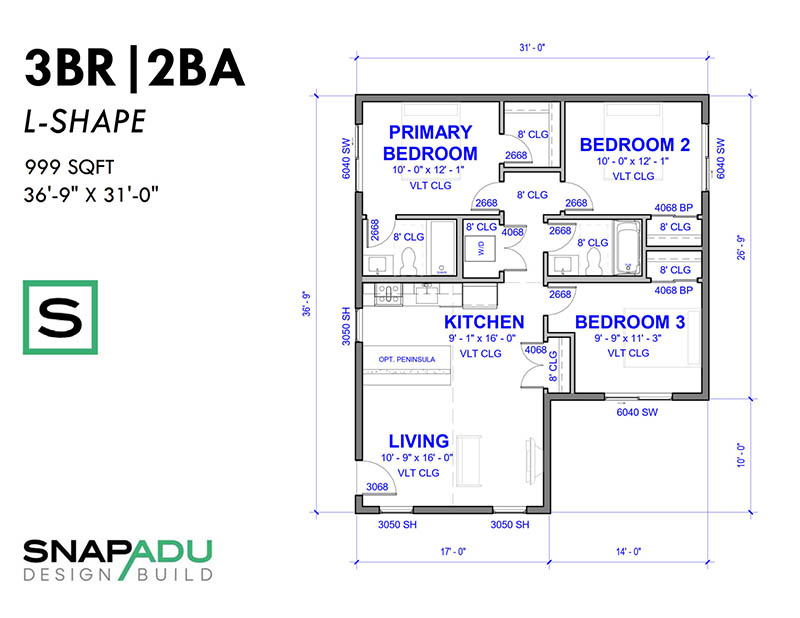
If you are a homeowner looking to move into your own accessory dwelling unit down the line, you may want to look into ADU floor plans with one more bedroom than you think you currently need. Then, this space can be used for storage or can be totally dedicated to one purpose (think designated craft room!). This will help you take advantage of space and enjoy your ADU for longer. For homeowners looking to design an ADU for themselves, you may want to consider adding an extra bath onto your floor plan if you anticipate regularly hosting after the move. Even a half-bath will allow both you and your visitors more privacy throughout their stay, especially if it is positioned close to the common areas of your home. Learn more about custom ADUs.
5. Research multi-use furniture
In a smaller space, it is wisest to invest in multi-use furniture and storage, as this will minimize clutter while maximizing the available space you have in your new home. For the entertainers, something like a couch with a pull-out trundle bed or a bench with storage space underneath will keep your rooms free and flexible. Then, when you have visitors, your trinkets can be hidden away and your couch-bed can be pulled out to comfortably accommodate everyone. Make sure you have space for your hobbies
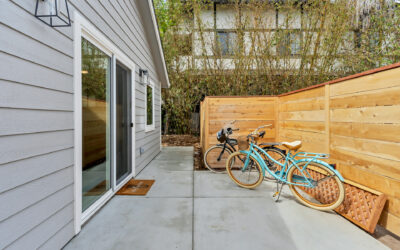
Unfortunately, less indoor space also means less room for outdoor hobbies. Large items like bicycles, surfboards, and even sports equipment will all need to be accounted for when moving into an ADU as these can often take up the most space. If you are not able to store some items outside – either in a shed or garage – then your only option will be to place these recreational items inside. Luckily, many companies offer wall-mount options for those with minimal floor space.
6. Decorate to save space
Considering your decorating style carefully will change the game when you move into your ADU. There are a number of resources available to help homeowners or renters decorate small spaces attractively, to make the space feel larger than it really is. As mentioned before, multi-use furniture is a surefire way to keep your home organized and calming, as it saves space and creates a more open atmosphere in the ADU. There are also a number of decorating techniques aimed towards opening up a room and making it feel larger. This includes decorating with low-contrast and bright colors, opening up the room to as much natural light as possible, and sticking with a cohesive theme throughout the entire home.
7. Try going digital
The digital age goes hand-in-hand with the rise of ADUs! As you look to eliminate the clutter around your home, technology is one of your best resources. Boxes of papers and documents can be easily scanned and downloaded onto a computer to keep them organized and out of the way. Even if you still need to utilize physical, paper copies of important documents, you will find your office to be much cleaner once the transition to digital has been made.
Less-important items like DVDs, CDs, and even books now have a digital counterpart as well. Streaming services have taken the place of DVD libraries, and the purchase of a portable speaker will take up less space than your old CD collection. While more nostalgic individuals may not be inclined to part with their favorite book or preferred album, little changes like this make a huge difference when downsizing. As with everything, it is advisable to sort through what you absolutely cannot part with, and digitize the rest.
How do you maximize space in an ADU?
One of the biggest challenges in designing an ADU is making the most of the available space. To do this, it’s important to consider every inch of the unit and identify ways to maximize it.
First, choose floor plans that minimize single-use space. Minimize hallways, or design them to serve as workspace for a laundry. One popular approach to minimizing single-use space is through an open-concept design. This means that multiple rooms serve dual purposes, such as a living room that doubles as a guest room.
Similarly, a kitchen island can be used as a dining table, and a Murphy bed can be stored away during the day to create a more open living space. Ottomans with built-in storage can serve as both a footrest and a place to store extra blankets or pillows. By eliminating the need for dedicated spaces, you can make the most of the square footage in your ADU.
Another way to make the space seem larger is through decorating techniques. Light colors and neutral tones can help open up the space and make it feel more spacious. Mirrors are another great way to visually expand the space by reflecting light and making the room appear larger than it actually is.
As you are thinking about downsizing, you might also want to check out the top considerations when building an ADU for a family member.

0 Comments